Infographic image

Infographics are a creative representation of a message communicated in an effective manner. Graphical representations make information more clear. With the amount of information available on the internet every day, the ability to target customers with small, easy-to-understand, bits of visual information can lead to huge success. Not only do infographics succeed in relaying a message, but there are also many reasons why they should be a part of your marketing strategy. Below are six reasons why your marketing should take advantage of this fun and simple way of communicating with your audience.

1. Visual Appeal

According to HubSpot, 40% of people respond better to images than text. Additionally, as attention spans are getting shorter, the faster someone can grasp information, the better. Using a combination of interesting graphics and bright colors is the best way to grab someone’s attention, while quickly communicating a message. Graphics may be easier to understand, but used alone they are less effective in communicating a message that is abstract or complicated. Simply put, combining graphics and text is the best way to grab the attention of your target audience.

2. Shareable

A good infographic can draw a lot of attention. A study by MDG Advertising notes that materials with visual elements can generate 94% more views than simple text. The more visual appeal something has, the more likely it could go viral. Create an interesting infographic, post it on your blog or social media networks, and people may share it. As your infographic is shared, it will increase the number of links connecting to your website, which in turn, will increase your search engine optimization (SEO).

3. Build Brand Awareness

When creating an infographic, be sure to include your brand’s visual identity (e.g., branding colors and logo) to increase your brand awareness. As the infographic is shared across the web, your brand becomes more recognizable. Don’t just tell people about what your brand, products or services – show them! Infographics are far more effective in achieving brand awareness than paragraphs of text.

4. Increase Your Followers

On social media, infographics typically generate more likes, comments and shares than ordinary text updates. They can open the doors to more engagement with your target audience, and possibly convert the audience into paying customers. Research from HubSpot confirms that posts including visual elements such as photos, graphics and infographics increases customer engagement by 37%.

5. Be an Expert

Infographics highlight your knowledge regarding a particular subject matter. This establishes you as an expert in your field, increasing your online credibility and reputation as a business owner.

6. Infographics are Easily Trackable

Use analytics to track every time your infographic is clicked, viewed, and shared. Knowing the details about your infographic will give you more insight and understanding into how your target customers behave and think. Knowing this information will allow you to adjust your marketing accordingly.

Summary

In this highly competitive and information heavy environment, small business owners are faced with the challenge of getting the attention of potential customers. Using infographics is a great way to reach your target customers and grab their attention. Infographics are a vital and effective tool every business owners should consider incorporating into their marketing strategy. To begin, you can decide to either hire a professional designer to do this for you or do-it-yourself. If you decide to DIY, Piktochart is a free service to get you started. Begin by figuring out a topic, then create your infographic. Just like any other marketing technique, you will need to dedicate the time to develop this as a useable and successful strategy. I guarantee you will find this not only fun, but also highly beneficial to your business.

Blog featured image

Resolution #1: Write a List of Goals for the Year

If you haven’t already done so, write down your list of goals for your business for 2015. Develop a plan of action for the coming months. This may seem daunting so set a date on your calendar to get it done by (e.g., Jan. 15th) and commit by circling the date on a calendar. In the meantime, look around at what others are doing and see where your business is lacking. Refer to the recent article I wrote (bit.ly/1tek6mr) to help get you started. Figure out what it is that you really need to accomplish this year. Write down your goals. Post them where you can see them, and start the year off with a clear and detailed plan in place!

Resolution #2: Join LinkedIn or Enhance My Profile

If you haven’t already done so, join LinkedIn. Simply put, LinkedIn is the best professional network out there. Every small business owner should have a complete and professional profile on LinkedIn. Not only does LinkedIn give you a place to connect with potential customers and clients, it is a place where you can connect with other professionals and network online. If you already have a LinkedIn profile, good for you! Now resolve to make sure it’s complete. Set a date on a calendar and circle it. For tips on creating a killer profile, refer to the articlehttp://www.onlinesuperninja.com/7-steps-to-linkedin-success/.

Resolution #3: Join a Local Chamber of Commerce

Local chambers of commerce may seem outdated in this era of social media, but these business organizations remain one of the best ways to network with other entrepreneurs in virtually any community. Some benefits of joining a chamber include giving members the opportunity to partner with other members to help you solve business problems (e.g., your client needs help with something that you can’t provide). Another benefit is they sometimes offer free information seminars where you can learn something new, or act as an expert by leading one. Many times, other members will offer discounts to one another that you can benefit from, or just having that connection with another business owner may result in financial benefits for your business. Finally, being an active member of a chamber can raise your profile as you meet with area leaders and other professionals on a regular basis.

Resolution #4: Figure Out an Amount I Can Afford to Spend on Social Media Marketing

They may say “The best things in life are free” but that’s not the case when it comes to social media marketing. Facebook has taken steps time and again to push small business owners toward paying for their marketing efforts on the network. We are no longer able to ignore this as FB rolls out a new policy later this month that will remove most (if not all) posts from business pages on news feeds unless they are boosted. While this is a major setback for many pages, it’s not the end of the world. There are other options out there. One of those is committing a part of your marketing budget to social media marketing. Read my recent article to learn more about the changes coming to Facebook, the reasoning behind it, and what you can do as a small business owner to come out on top by clicking the link:http://bit.ly/1Df7O6j

Resolution #5: Improve My Time Management Skills

If there’s one thing that can make a huge difference in your daily productivity level, it’s having great time management skills. This is probably the most important resolution for my business goals this year. Typically, I juggle anywhere from 8 to 10 projects on a daily basis. Strong time management skills are key when there is so much going on (obviously this carries over into the daily routines of being a parent as well). To improve my productivity, I’m trying something new beginning today. Instead of the daily checklist of projects that I intend to work on today, I’ve created an actual schedule. For example, from 9:30-11 I will work on Project A, then from 11-1:30 I will work on Project B, and so on. I’m hoping this will allow me to focus better throughout the day, and therefore increase my productivity. If anyone has any other tips for improving their time management skills, let me know!

Resolution #6: Keep Learning

Never stop learning. Improve yourself and your small business by resolving to attend conferences and workshops, explore online classes, and watch tutorials and instructional videos throughout the year. A good way to commit to this is to work it into your schedule. Take a Friday morning off to attend a workshop or participate in an online class. Over the weekend, research upcoming opportunities in your area or online, write them down, then register and put it into your schedule.

Resolution #7: Make Sure My Online Presence is Professional

These days, it’s not enough to just have a website. To be taken seriously as a business owner, you need to have a professional-looking site. Your website may be the first chance you have at making a good impression on a potential buyer or client. Even if your product is the best out there, first impressions can make or break your ability to get new business. You only have one shot at making a first impression. Make it good.

Resolution #8: Improve My Work-Life Balance

Most everyone can relate to this one. We all face demands, both professionally and in our personal lives, that make finding a happy medium very difficult. With an increase in people working from home, or the ease of joining in on work conversations and meetings via smartphones, developing a good balance is complicated. This article from WebMD offers 5 great tips for improving your work-life balance. It’s all about scheduling, focusing, and allowing yourself some downtime. I’m trying out these tips starting today! http://bit.ly/1cCXuco

Resolution #9: Reconnect with Past Clients Throughout the Year

For any business owner, customer loyalty is key to continued growth. Sometimes though, we lose touch over time with past clients/customers. It’s important to work at continuing that relationship. One of the best ways to engage a past customer is give them a new reason to engage with you. Offering them a free item, a discount, or reduced rate to bring them back is one way. Remember oftentimes a past client can become one of your biggest sources for product feedback and brand advocacy. My focus will be on developing a method for reconnecting on a regular basis with clients I have worked with, either with the intention of renewing a working relationship, or as a seasoned referral source.

Resolution #10: Seek Opportunities Where I Step Outside of My Comfort Zone

We all love our comfort zone. It’s safe and secure. It’s our happy place. But, choosing to not leave that zone means never challenging yourself. I resolve this year to seek out opportunities where I’m forced to step outside of my comfort zone. I want to face challenges that will help me grow, and potentially make me better at what I do, both professionally and in my personal life. Here’s a great article listing 6 reasons why you should step outside of your comfort zone. http://huff.to/Zg4g2G

Resolution #11: Check Out the Competition

There are many reasons why you should be keeping an eye on your competition. The main reason is so that you can learn from them. Their successes and their failures can help you better craft your own business. Subscribe to their newsletters to see what they are doing. Follow them on social media to see how their marketing tactics are working. Keeping a close eye on the competition is a great way to improve your own business. This article explains 3 reasons why it’s important to know your competition (minus the sales pitch at the end) http://bit.ly/1wdgX6E

Resolution #12: Take Breaks Now and Then to Stay Productive

There’s a science behind why we need to take breaks at work. Like a lot of people, I tend to stay at my desk throughout the day. Taking breaks from work means not getting work done. I’ve heard time and again how important it is to incorporate breaks in a work day to be more productive and focus better. I resolve this year to finally begin incorporating breaks into my day. It’s amazing how much a break can stimulate your mind. Here’s a great article on why we should be taking breaks, as well as helpful tips on how to schedule breaks throughout the day: http://bit.ly/1q6GpfI

Resolution #13: Establish Milestones to Track Success

Now that we’ve written down our goals for 2015, what’s the best way to achieve those goals? Establish milestones. A year is a long time to stay focused. Create a schedule with monthly (or weekly) milestones. Make those milestones measurable so you can track your success. Note any roadblocks that come into play as you’re working toward your monthly goals, then make changes accordingly as you move forward to the next month.

Resolution #14: Blog More

If you have a blog, you need to update it regularly. Period. Why? Well, there are many reasons. In regards to SEO, writing separate blog posts targeting different keywords will get you more SEO benefits. More blog posts = more keywords you can target. Plus, there are SMO benefits. The more blog posts you write, the more they can be shared on social media channels, retweeted, liked, etc. Not to mention regular posts will present you as an expert in your industry, and give you more opportunities to present the different aspects of your business. Finally, Google loves fresh content. In fact, Google has a term called “QDF” or Query Deserves Freshness. If you are publishing content regularly, your content has a better chance of getting picked up in some of the searches, as compared to old content. Need help fitting it into your schedule? Check out this great articlehttp://www.shoutmeloud.com/how-to-maintain-blog-posts-frequency.html and get writing!

Resolution #15: Get an Early Start Every Day

Did you know many of the most successful people out there are early risers? There’s a reason for that. Getting things done such as a workout, mapping out the day ahead, running through emails, etc. before you ever sit down at your desk to begin your workday really makes a big difference. Nothing will damage your productivity for the day more than wasting the first hour or so trying to get organized. It’s a fact that morning people have been found to be more proactive and productive than non-morning people. So set the alarm, pull yourself out of bed, and start the day off right. Everyday. The article “5 Things Super Successful People Do Before 8am” will help motivate you: http://onforb.es/1eQ5nIh

Resolution #16: Ask for Help

Many small business owners try to do it all. Now is the time to realize that you can’t. Sometimes you need to ask for help. How do you do that? Outsource. Find other professionals who can do what you don’t want to do, or aren’t necessarily skilled to do. Not only will outsourcing build professional relationships, it will help your business grow. Read this article on How to Build a Better Business with Outsourcing:http://www.entrepreneur.com/article/204652. It’s not just for big business anymore.

Resolution #17: Evaluate My Pricing and Make It Reflective of My Service

Any freelancer will admit they have a hard time figuring out what to charge for their services. It’s a fine line. You want to be paid what you’re worth, but you don’t want to scare away any potential business. In the end, many freelancers end up charging less than they should. Here’s a great guide explaining how to figure out fees, calculate a rate, compare pros and cons of how to charge for a project, and much more: http://bit.ly/1lSNIGr

Resolution #18: Ask for Testimonials and Referrals

It’s natural to feel nervous about asking for testimonials and referrals, but doing so is an excellent way to grow your business. Both are great selling tools. It’s a fact that people would rather do business with people they know (or know of). Personal recommendations go a long way. After all, a positive endorsement from someone you know and trust is very reassuring. In addition, having a testimonials page on your website will give potential clients a chance to learn more about you. Check out this article from HubSpot that not only offers advice on how to ask for referrals, but includes an email template as well: http://bit.ly/1xYaher

Resolution #19: Support My Community by Donating My Time and Services

There are many reasons why small businesses should be giving back to their community, either by donating their time or services. For starters, helping others is always a good thing to do, both for yourself and for your recipient. As a small business, it’s also a great way to expose your company to the community, and it may introduce you to people you wouldn’t normally meet. If you’re a business that has employees, it’s a way to boost morale and promote team building through community service activities.

Resolution #20: Use Contracts

I’ve been using contracts with projects for the majority of time that I’ve been freelancing. Early on, though, the contracts basically listed out the price for the job, what that cost entailed, and the project objective. It wasn’t until years later when I realized I needed to include specific information in the contract to protect myself. After learning that lesson the hard way, I now include detailed information in every contract. Check out this fun article from WikiHow on how to create a freelancing contract before moving forward on your next project. http://bit.ly/1yxIhxf

Resolution #21: Evaluate Clients and Projects from the Past Year and Note What Worked

One of the best ways to measure success is to note the number of clients that come back year after year. As my business grows, that number grows as well. What brings clients back time and again? Consider conducting a customer survey. A survey will show clients that you care about their needs, as well as allow you to gain valuable data on processes that aren’t easily quantified. Ask clients what they like about your business, changes they’d like to see, and other services that might interest them. Take special notice of any problem areas and resolve to fix them this coming year. Analyzing the data will give you a better idea of how you’ve gained (and maintained) client relationships, and better prepare you as you begin new relationships in 2015.

Resolution #22: Remember, Running a Small Business is like Running a Marathon

Becoming a successful small business owner is like running a marathon. Building a successful business takes time. We all go at our own pace. It’s important to stick to a pace that you’re comfortable with, one you can manage, to get to your end goal. Trying to keep up with others who are moving faster may not be in your best interest. Do what you can do in the time that you have available. It’s very important to not burn out. Any business owner knows how easy it can be to burn out. There is always something that needs your attention. Taking a break may make you feel like you’re not committed to your business, but the opposite is true. Allowing yourself some downtime, a chance to “refuel”, will help your business grow. Growing a business is a journey. Similar to running a marathon, it takes endurance, dedication, and plenty of hard work along the way. So stay focused on that finish line. You’ll get there eventually!

Facebook marketing blog

Power of the Boost

Recent changes to Facebook’s privacy policy and overall rule system are certainly making life difficult for entrepreneurs. The company’s policies around advertising one’s business on the social network has (once again) changed. If businesses don’t pay Facebook to boost their status, business pages will not be getting their message out. Previously, a business owner would boost a status to spread the word to more people. But, beginning in mid-January, the social network will intensify its efforts to filter out unpaid promotional material in user news feeds. Because of this new rule, even if the page has thousands of fans, a status may never be seen unless it has been boosted. Basically, any business who relies on free status marketing will suffer.

Revamp Your Marketing Budget

Facebook warned of this in early November 2014 when they explained that the practice of businesses posting free marketing pitches or reusing content from existing ads will suffer “a significant decrease in distribution” once the new policy rolled out. The average small business owner can not afford to pay thousands of dollars to promote their content each month, or, at the very least, will need to reevaluate their marketing budget to account for these changes. Considering that more than 80% of small companies who use social media to promote their businesses list Facebook as their top marketing tool, this new policy means a major shift in many social media marketing plans.

The Truth About Online Marketing Campaigns

Many business owners are going to need to look elsewhere for effective and affordable options. Facebook stands to lose a lot of small business entrepreneurs as doing business on the social network becomes more expensive. So why are they doing it? Facebook’s vice president of small business, Dan Levy, explained the reasoning behind this move. He claims Facebook’s paid-advertising options have become more effective over time. He suggests companies view Facebook as a tool to “help them grow their businesses, not a niche social solution to getting more reach or to make a post go viral.” Organic reach, Levy says, is only one of several reasons companies benefit from having a presence on Facebook. The network has over 1 billion hits per month. Just by being on the network, the likelihood that your business will be found increases. This makes sense, and many small-business owners say they accept that they will have to pay to market their businesses on Facebook. Any good marketing campaign costs money. When looking at an online marketing strategy, the use of free online marketing campaigns has not always resulted in positive responses. Todd Bairstow, partner at the online-marketing firm Keyword Connects, explains that the strategy of attracting fans and “likes” on Facebook using unpaid posts “ultimately failed for almost everyone we know.” Facebook may help “spread the word”, but using the network to market your business is not going to necessarily result in sales or new business.

What Are My Options?

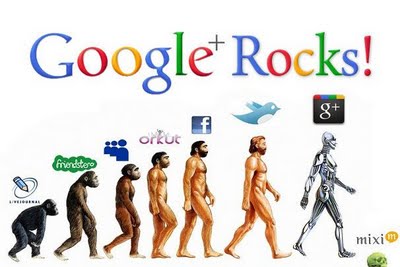
This leaves small business owners with a decision to make. Do you restructure your marketing budget to include paid promotions on the network where you’ve built your brand and have a strong following? Or do you search for other options? Many are focusing their efforts and online marketing budgets now on boosting their Google rankings. This is a more complicated process, as well as more time consuming, but the overall results may be better for small business owners. For more information on how to best utilize search engine optimization, visit Google’s page dedicated to this topic by clicking How a Google Search Works.  Some business owners may choose to leave Facebook altogether and focus their time and energy on other outlets. Google Plus is option. Not only has G+ grown to over 540 million active members, it has the power of the Google search engines behind it, resulting in posts showing up in a Google search. Also, it’s known to generate as much brand engagement as Facebook.

Whatever you decide, just make sure it’s something that you can afford and can commit to. There are many options out there. Now’s the time to make informed decisions for both yourself and your business. Good luck!

As 2015 gets closer, we all prepare the annual list of changes we want to make in the new year. While many may focus on general ideas of healthier lifestyles and losing weight, small business owners should take this opportunity to develop a very specific list of goals. This is a chance for us to step back and take a good look at our successes and our failures over the past year. Did your business grow? Did you add a new service or two over the year? Did you invest in your business? If you said “Yes!” to one or more of these questions, great! If not, this is definetly the time to grab a pen and a piece of paper and start writing out the changes you need to make so 2015 is your best year yet. Even if you had a very successful year, there are always new goals you should focus on as the new year begins. To begin, let’s break it down into 4 distinct categories of goals: Marketing, Networking, Professional and Financial.

This could include running more print ads, developing a strategic social media marketing plan, focusing your efforts on email campaigns, or anything else that puts your business in front of your target audience. For example, one of my marketing goals for the new year is to run a monthly e-newsletter that goes out to my current client base. In addition, I’d like to add 50 new subscribers by years end. To do this, my focus will be on providing interesting content so subscribers don’t unsubscribe, as well as making it easy for new subscribers to sign up, offering simple forms on social media outlets, in emails, and on my website. One great thing about marketing with an e-newsletter is the ease of which I can track what works and what doesn’t. At the end of next year, I can take that information to establish better methods moving forward.

You may want to consider developing a direct mail piece this year to promote your business, or maybe invest in the development and design of a brochure that you can hand out to potential clients. Consider various advertising outlets and how they may benefit your business. Also, consider how much you are willing to invest in marketing your business over the coming year, put a number on it, then begin steps to stay within that price range. This includes online marketing. Some outlets allow you to promote your business for free, but you will probably need to invest a bit this year to really promote your business online. Facebook has made many changes, none of them beneficial to the small business owner. We need to accept the fact that free online marketing is becoming a thing of the past. If you really want to use social media to promote your business, namely Facebook, you will probably need to open your wallet this year. Just make sure you have a number in mind before you begin paying for any online marketing.

Networking is the area that I’ve paid the least attention to over the years. My business has grown strictly from word of mouth. But as I continue to grow, I realize I can’t rely on word of mouth alone. I need to get out there and network. For starters, I joined a networking group last September but have yet to attend a meeting. Obviously, belonging to a network does not mean that I’m now networking. My networking goal for 2015 is to attend meetings regularly. In addition to that, I plan to attend 3-5 large networking events in 2015. On my “to do” list is begin researching some events for the upcoming year and registering for them.  As a small business owner who works from a home office, it is very easy to sit at my desk all day and work on projects. As long as I have work in, I justify my inability to attend meetings and other networking events. Not in 2015. I have concrete goals: attend meetings as often as I can with the network I belong to and register for 3-5 large events in the coming year.

To help you develop your own networking goals, consider who you should know to grow. Are you a member of a local Chamber? If not, joining a Chamber is a great opportunity to put your business out into the community. If your business would benefit more from online networking, consider developing strategic networking campaigns to promote your business online. For example, join relevant groups on LinkedIn and start conversations. On Facebook, follow similar business pages and see what they are doing to network their business online. Comment on status updates. Make professional connections online.

professional

After 8 years as “Erin Sweeney Design”, 2014 was my most successful year yet. One reason was I was able to dedicate more time to my business. I also invested in the business more this past year than before, buying a new laptop and new software. One problem, though, was that I found I was a little too busy. I spent so much time working on project work, I never allowed myself the chance to improve my skills and knowledge, which was a goal I had set for myself in the beginning of the year. I had planned to take a course or two over the year. I also planned to learn new software that I have but never set aside the time I needed to teach myself. So, my first professional goal for 2015 is a focus on education, learning new software programs and taking at least one course this year.

In addition to these goals, I plan to offer 2 new services in 2015. Depending on the industry you are in, if it’s possible, consider adding to your list of services each year. Even if it’s only 1 or 2 new services, expanding on what you offer will grow your client base. With this in mind, I also have a specific goal of gaining 15 new clients in the new year, as well as reaching out to past clients throughout the year and reconnecting. If your goal is to grow your client base, consider where they are. This is where your marketing and networking goals will come into play. Next, write down a number and develop strategies for hitting that number.

At the end of the day, every business owner wants to make money. The trick is figuring out how to make enough to stay in business. This is a time to look at what you made over the last year, comparing it to the previous year. Did your business earn more? Less? About the same? Whatever the answer, now is your chance to write down how much you want your business to make next year, then develop goals to make that happen. For example, figure out your hourly wage. Decide how much you’d like to make per week (realistically). Next, figure out how many hours you need to work to make that amount of money. Are you able to dedicate that amount of time each week to your business? If not, readjust your number to something that will work for you and stick to it, or make changes in your pricing to help you reach your goal.

You could look at 2015 as the year that you really invest in your business. Buy new software or equipment, dedicate an amount of money to advertising and promotions for your business throughout the year, hire assistants or employees, etc. Consider how investing in your business will help it to grow, come up with an amount that you’re willing to part with to make that sort of investment, then make it happen.

I can do this

Be SMART: Make sure your goals are Specific, Measureable, Achievable, Realistic and Timely. Setting specific goals can be hard for a small business owner, but it’s proven that we are more successful at reaching a target if we have a specific number in mind. We all know what we want to happen, but the fact is that just wishing for a great year isn’t going to cut it. You need a detailed and specific course of action ahead of you to achieve your goals. Having hard numbers is the best start. Write it down. Keep your list posted somewhere that you can see it every day. Develop a means for achieving those goals, making sure the goals are SMART. Then, as you reach a goal, check it off the list. You may be surprised how quickly the goals are met once you focus your energy on a real course of action.

Good luck and here’s wishing you a wonderfully successful 2015! 

google-plus-vs-facebook-logoYou’re already using a Facebook business page to market your business, so why consider moving to Google+? You have a limited amount of time to dedicate to social media marketing, and with over 1 billion users, you figure Facebook gives you the best opportunity for expose your brand to potential clients. Well, you’re partly right. More people are on Facebook, which means more exposure for your brand. And Google+ seems similar to Facebook. Why do both? For one, a lot of people want to escape the clutter of Facebook. Also, Google+ is a huge social network with over 540 million users using at least one Google+ service. So even if it is not as big as Facebook, it’s still pretty big. Plus, it offers features that Facebook does not for your business. Such as:

The Ability to Manage your Page with Circles

Circles place groups into categories. This allows you the ability to market your brand to the appropriate category. You can create a category for clients, another for professional peers who you can engage in conversations with, and another for employees. These are just a few samples. Many more exist. The main idea here is Circles gives you better control and allows you to exercise a more targeted marketing strategy than Facebook does.

The Communities Feature

Communities allows groups to form around a particular interest. What’s great is, unlike Facebook, Google+ allows you to join a community as a brand, which in turn allows you to interact with potential customers and engage in conversations.

Hangouts

This is a completely unique feature that allows you to directly engage in group meetings, discussions, or demonstrations. Businesses can use Hangouts to organize a discussion explaining a product or service, then archive that Hangout and upload it to YouTube (which, by the way, integrates very nicely with Google+). Other ways to utilize Hangouts are hosting a webinar or offering a free consultation.

SEO

With Google+, you have the power of Google’s search engines behind you, making it easier to connect to the more than 1 billion people who use Google to search online every day. Google+ also integrates well with any of the marketing your business does with Google. Plus, what G+ Profile and G+ Business Pages bring is pages which can be indexed in search results. This means that these Google+ pages will show up in the results, if optimized correctly, for your brand keyword. Also, it extends your local reach. Google directs traffic from Google Maps to the Google+ community. Now people can get directions, recommendations from friends and even host events from a Google+ Local page, all by adding your local business to Google My Business.

google plus rocks

So now that you know Google+ rocks, have I convinced you to at least give it a try? Good. Below are some tips on getting started on Google+:

  • Create a Personal Profile Just like Facebook, you need to create a personal profile before you can have a business page.
  • Create a Page Carefully select your business category since you will not be able to change it later. If you want your business to show up on Google Maps, be sure to select “Local Business or Place.”  Next, add a tagline and a profile photo (250 x 250 pixels), preferably a logo or image that portrays your brand.
  • Customize Your Page Make sure your cover photo clearly represents your business. Completely fill in the “About” section. Add links to all of the places you are active on the web, including your website. Add photos and videos to enhance the page. The more engaging the content, the more followers you’ll get.
  • Start Posting Decide what message you want to send out and start posting on your page. Set goals for what you want the page to do. Establish those goals, then develop a plan to make it happen.


10541397_814345751938780_7815037634690581642_oImpressionism (1865–1885) and Post-Impressionism (1885–1910)
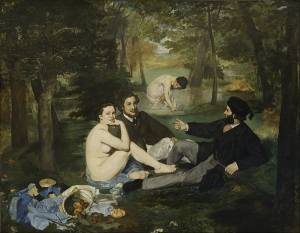
Impressionism and Post-Impressionism have been called a fight about form and function in art. Impressionism was a painting style concentrating more on color and the representation of things in the real sense. Post-Impressionist painters gave a lot of importance to the emotional aspect of human behavior, and little importance to the appearance of the subject. The Impressionists began by using Edouard Manet’s technique of painting with bright colors, without regard for shadows, and by painting outdoors rather than in a studio. Painters used thin visable brushstrokes, concentrated on portraying light, and displayed ordinary subject matter. Paul Gauguin, one of the fathers of Post-Impressionism, believed that the ability to choose colors, rather than copy nature, was part of the artist’s power. Post-impressionist painters used vivid colors, a bold application of paint, and portrayed real-life subject matter using geometric forms and unnatural colors. Impressionism paved the way for other styles including Cubism and Fauvism, while Post-Impressionism paved the way for Modern Art. To view art from this period, visit on.fb.me/1ttgFch

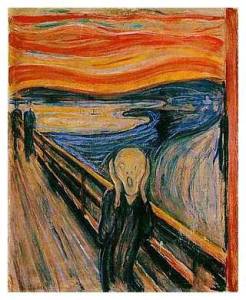
10346373_816845815022107_3538241028332961091_nExpressionism (1905-1933)
Expressionism originated in Germany at the beginning of the 20th century. It was a period where artists sought to portray meaning or emotional experience in order to evoke a mood or an idea. It was a reflection of the artists’ perspective, substituting the visual reality of an object with their own interpretation to represent its meaning. Artists used distortion and exaggeration for emotional effect. Unlike Impressionism, its goals were not to reproduce the impression suggested by the surrounding world, but to strongly impose the artist’s reaction to the emotion stirred by the subject. Characteristics included highly subjective subject matter that was personal and spontaneous, distorted, exaggerated, and primitive, vivid, jarring, and sometimes violent. To view art from this period, visit http://on.fb.me/1sLUAIs.

10392505_817225308317491_7042248722490048991_n

Cubism (c. 1907)

Cubism, pioneered by Georges Braque and Pablo Picasso, began around 1907, and has been considered the most influential art movement of the 20th century. It was the first abstract style of modern art. Cubist paintings look at subjects in new ways in an effort to depict three-dimensions on a flat canvas. Drawing on the expressive energy of art from other cultures, particularly African, Micronesian and Native American art, artists were intrigued and inspired by the stark power and simplicity. Similar to art from Ancient Egypt, Cubists wanted to show the most important parts of the things they painted. There were 2 stages: Analytical Cubism (artists analyzed the subject and broke it up into different blocks, looked at the blocks from different angles, then reconstructed the subject, painting the blocks from various viewpoints) and Synthetic Cubism (artists began to add in colored paper, newspapers, and other materials in a collage.) Popular subjects for Cubism included musical instruments, people, bottles, glasses, and playing cards. There were very few Cubist landscapes. To view art from this period, visit http://on.fb.me/1rx3o6a

1919663_817867041586651_5034275192629385905_n

Dada (1916-1923)

Dada was born out of a negative reaction to the horrors of World War I, and was based on the belief that the ‘reason’ and ‘logic’ of bourgeois capitalist society had led people into war. It was a rejection of reason and logic, focusing, instead, on nonsense, irrationality and intuition. Dada artists helped influence later movements including Surrealism, Pop Art and Fluxus. Dadaists were fed up. If society was going in a direction that included war, they would have no part in it or its traditions, especially its artistic traditions. Dada artists referred to themselves as non-artists and their work as non-art. Dadaists meant for us to rethink the items that surround us so that we might rethink our world. To view art from this period, visit http://on.fb.me/1p8AaCJ

10491225_818281504878538_3516376121105687701_n

Abstract Expressionism (c. 1940s)

The Abstract Expressionism movement began in the 1940s in New York City following World War 2. What is interesting about this is that, prior to the second world war, Paris had been the center for new modern art trends. Afterwards, NYC emerged as the major center for artists. Abstract Expressionism is art made up of lines, shapes, and colors, having no recognizable object. The Abstract Art movement is called Abstract Expressionism because, although the art has no subject, it is still trying to convey some kind of emotion. Some artists had theories on the emotions that were caused by certain colors and shapes, planning out their paintings to the last detail. Other artists painted with emotion and randomness hoping to capture their emotion and subconscious thoughts on the canvas. To view art from this period, visit http://on.fb.me/1AXrAiU

10620668_818769114829777_631216479927944539_n

Pop Art (1950s-1970s)

Pop Art is art made from images and icons that are popular in the modern world, such as product labels, advertisements, comic books, and celebrities. It was a reaction to the seriousness of Abstract Expressionist Art. Though considered similar to Dada due to its utilization of found objects and images, Pop Art differs in that it replaced Dada’s destructive, satirical, and anarchic themes with a detached glorification of the artifacts of mass culture. Subject matter was no longer the traditional “high art” themes of morality, mythology, and classic history. Pop artists celebrated commonplace objects and people of everyday life, in this way seeking to elevate popular culture to the level of fine art, and has become one of the most recognizable styles of modern art. To view art from this period, visit http://on.fb.me/1lkGRXf

10556446_808372235869465_8152458197004461236_n

Romanesque (c. 1000 AD)

The Romanesque Period began around approximately 1000 AD. This style was seen throughout Europe until the rise of the Gothic style in the 13th century. Romanesque architecture retained many basic features of Roman architectural style, while both sculpture and painting were characterized by a very vigorous style. Painting was similar to the Byzantine style of portraying iconographic themes. Works were lavishly decorated, and in architecture we saw the capitals of columns often carved with complete scenes of several figures. High relief was above all the sculptural mode of the period. Colors were striking and mostly primary. This was the period where stained glass became widely used, and in painting, art tended to be within a frame, creating a sort of tension within the composition. Figures continued to be portrayed in size proportional to their importance, and portraiture was rarely seen. The focus was on elaborately decorated themes of religious significance. To view art from this period, visit http://on.fb.me/1mCkkA

10551427_809442692429086_8207891494289717158_o

Renaissance Art (1400–1550)

Renaissance Art emerged as a distinct style in Italy and saw a rebirth of classical culture. The goal of most Renaissance Art was to show the importance of people and nature, not just religion (a major shift from earlier periods). It tried to show people as lifelike (3-dimensional) and engaged in everyday activities, capturing the world as it is. Other characteristics of Renaissance art are that it reflected a great interest in nature, people were depicted showing an increasing knowledge of anatomy, bodies looked active and were shown moving, faces were expressive, and the use of symmetry, perspective, and light treatments became more realistic. To view art from this period, visit hon.fb.me/1sULSH0

10506860_810088289031193_7610767391144426422_o

Mannerism (1527–1580)

Mannerism emerged from the later years of the Italian High Renaissance, and acted as a bridge between the idealized style of Renaissance art and the dramatic theatricality of the Baroque. Mannerist compositions, in contrast to High Renaissance, were typically associated with attributes such as emotionalism, elongated human figures, strained poses, unusual effects of scale, lighting or perspective, vivid often garish colors. Interestingly, Michelangelo, the king of High Renaissance art, is said to have segued nicely into Mannerism, having been known to have a tendency toward the dramatic and emotive in his art. As a whole, Mannerist painting tends to be more artificial and less naturalistic than Renaissance painting. To view art from this period, visit

1421043_810549898985032_7416368669016888741_o

Baroque Period (1600–1750)

The Baroque Period in art history saw some of the greats, including Reubens, Rembrandt, and Caravaggio. It was a style that used exaggerated motion and clear detail, showing us drama, tension, exuberance, and grandeur to draw the viewer in to participate in the scene. The Catholic Church encouraged this art form as a result of the Protestant Reformation, demanding that art speak to the illiterate rather than to the well-informed. As part of a Counter Reformation, the Church wanted to re-infuse the Catholic faith with new vigor and confidence. The style exaggerated lighting and portrayed emotionally tense scenes. Images are direct and obvious, with a dramatic use of color. There are severe contrasts between light and dark, as well as light and shadow. In contrast to Renaissance art with its clearly defined planes (e.g., each figure placed in isolation from each other), Baroque art has continuous overlapping of figures and elements. Baroque works did not show everyday life. Instead, they reaffirmed the Catholic faith and glorified both church and monarchy of their influence and power with themes of grandiose visions, ecstasies and conversions, martyrdom and death, intense light, and intense psychological moments. To view art from this period, visit http://on.fb.me/1m15PWN

10465440_812701548769867_3173457112909020281_o

Neoclassical Period (1750–1850)

The Neoclassical Period saw a desire to rekindle the spirit and forms of classical art from ancient Greece and Rome, as well as their principles of order and reason. Neoclassicism was also, in part, a reaction against the sometimes vulgar display of Baroque art, as well as the decadent frivololity of the decorative Rococo school. Neoclassical paintings and sculptures were serious, unemotional, and sternly heroic. Neoclassical painters depicted subjects from Classical literature and history, using sombre colours with occasional brilliant highlights, to convey moral narratives of self-denial and self-sacrifice, while Neoclassical sculpture was restrained compared to the more theatrical sculpture of the Baroque style. To view art from this period, visit http://on.fb.me/1ri7H4X

10467111_813345305372158_8967023510674238957_o

Romanticism (1780–1850)

Romanticism was a reaction against Neoclassicism and is also considered a reaction to the Industrial Revolution which occurred during the same time period. It was a movement that glorified concepts such as liberty, survival, ideals, hope, awe, heroism, and despair. Romantic art focused on emotions, feelings, and moods of all kinds. It was one of the first times in the history of art that landscapes became a significant subject for painting. In addition to landscapes, religion and revolution also made up the widely varying subject matter of most paintings, while brushwork became looser and less precise. The great Romantic artist Caspar David Friedrich summed up Romanticism saying “the artist’s feeling is his law”. To view art from this period, visit http://on.fb.me/1td6H0F

10417786_813789731994382_8275330389604246683_n

Realism (1848–1900)

Realism was an attempt to represent subject matter truthfully, with an emphasis on the ugly or sordid. It rejected Romanticism, revolting against the emotional and exaggerated themes of the movement. Realism artists painted everyday subjects and people. They didn’t try to interpret the setting or add emotional meaning to the scenes. It is believed the invention of photography in 1840 likely helped to spur on the Realism movement. Unlike some other artistic movements, there was little sculpture or architecture as part of this movement. To view art from this period, visit http://on.fb.me/1oZ0KOJ

10574264_804132646293424_5046895926086521256_n

The Stone Age  (30,000 b.c.–2500 b.c.)

The history of art begins in the Stone Age. Predating writing by almost 27,000 years, art was seen in cave paintings, fertility goddesses, and megalithic structures. The Stone Age consisted of 3 distinct periods: Paleolithic (the earliest human artifacts showing evidence of workmanship with an artistic purpose), Mesolithic (representational image-making, e.g., fertility goddesses and cave paintings), and Neolithic (transition of nomad societies to agrarian in need of permanent shelter; first samples of pottery, architecture and the construction of megaliths). Lascaux Cave Painting, Woman of Willendorf, and Stonehenge are all examples of these first accomplishments in human creativity. To see art from this period, visit 

10407601_804642206242468_4632853443672750184_n

Ancient Egypt (3100 BC-30 BC)

The art from Ancient Egypt shows a heavy focus on the afterlife, with surprisingly little artistic change over the course of 3000 years. Much of the artwork had to do with their religion, and most were never intended to be seen. They were designed to benefit a divine or deceased recipient. The art in tombs was meant to assist the deceased in the afterlife. Another characteristic attributed to the art of Ancient Egypt is the method in which 2-dimensional objects were represented. Each object was rendered from its most recognizable angle. This is why images of people show their face, waist, and limbs in profile, but eye and shoulders frontally. Also, different classes were depicted by scale. Kings were the same size as deities, both being larger than the elite and far larger than the common Egyptian. Luckily, because of the incredibly dry climate, much of the art from Ancient Egypt has survived, though a majority of art was stolen from tombs by thieves over thousands of years. To see art from this period, visit 

10900_805081079531914_643306731380741492_n

Ancient Greece (c. 1000 BC)

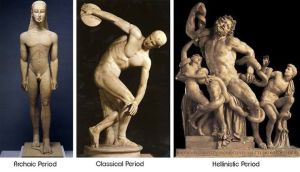
The art of Ancient Greece is usually divided stylistically into four periods: the Geometric (beginning c. 1000 bc), Archaic (7th century bc), Classical (beginning c. 480 bc), and Hellenistic (beginning c. 336 bc).The Ancient Greeks were perfectionists in art. This especially holds true in their sculpture. Little is known about the Geometric, or Greek Dark Ages, period. But during the Archaic Period, we saw sculptors portraying both men and women with similar features, standing stiffly with arms at their sides. Later, during the Classical Period, they sculpted subjects in more relaxed postures and in action scenes. After Alexander the Great conquered much of Asia, Ancient Greek sculptors became influenced by the cultures and people they had conquered. This period is known as the Hellenistic Period, the time when new subjects including women, children, and common people appear in Greek art, and sculptors allowed for their statues to be admired from all angles. 

10550867_805647382808617_1269007876801981533_n

Ancient Romans (c. 200 BC)

Around 200 b.c., the Ancient Romans began pillaging countries and looting the towns. After conquering Greece, they brought many Greek artists to Rome to make sculptures for them in the Greek fashion. The art of Ancient Greece had a great influence on the art of Ancient Rome. Only after Rome became a dictatorship around 27 b.c. did Roman art develop its own style. Sculpture was considered the highest form of art by Ancient Romans. Original Roman sculptures attempted to portray a real person, typically paying more attention to each person’s distinct face rather than trying to depict the ideal person like the Greek artists did. Most of the early sculptures were of a person or a mythological character, and were primarily used is decorations in public buildings, public parks, and private homes and gardens. One of the most popular types of sculpture in Ancient Rome was the bust. Wealthy Romans placed busts of their ancestors in the atrium of their homes as a way for them to show off their lineage. To see art from this period, visit 

10568916_806256676081021_4502958225669672490_n

Byzantine Art (c. 715 AD)

Byzantine Art began as a reflection of the differences between the development of the Catholic religion in the West and the Byzantine Empire of the East. The art was created primarily for the Eastern Orthodox Church and reflected a number of characteristics, including figures being depicted as front facing, one-dimensional, flat objects with no shadows, and long, narrow and solemn faces. There were no sculptures during this time because they were seen as a form of idolatry. Byzantine artists had a disdain for vanity, and sought to represent a spiritual nature. This time is broken down into 4 distinct periods: The Iconclastic Controversy, the Macedonaian Art period, The Sack of Constantinople, and the Paleologus Dynasty. The Iconclastic Controversy (715 AD-852 AD) was a religious dispute where iconoclasts believed artists should not create pictures of Jesus Christ, the Virgin Mary, or the saints. The iconodules disagreed with this belief. The Macedonian Art (843-1025) period lifted the ban on icons. The Sack of Constantinople in 1204 was when Christian Crusaders deliberately destroyed monuments, statues, paintings, and manuscripts – the accumulation of a thousand years of Byzantine Art. Finally, The Paleologus dynasty was a time with increased interaction between Byzantine and Italian artists. The influence of Italian art resulted in Italian-style frescoes replacing the traditional mosaic-work. To see art from this period, visit 

pinterest-pinboard-600

With over 1,000 visitors every minute, Pinterest has become the third most popular social network. It has over 85 million unique visitors each month, and is the 16th most visited website in the world. Certainly sounds like a great place for your small business to be! But how do you utilize Pinterest for your small business? What is the best way to use Pinterest to market your business? Check out The Small Business Guide to Pinterest: Everything You Need to Know to Successfully Market Your Business by Digital Sherpa and learn how to use this popular social network to establish your brand and gain potential customers.

Who do you think are considered the 5 top most iconic cartoon characters of all time? See if your favorites made it to the top.

“We should say to each of [our children]: You are a marvel. You are unique. In all the years that have passed, there has never been another child like you. Your legs, your arms, your clever fingers, the way you move. You may become a Shakespeare, a Michelangelo, a Beethoven. You have the capacity for anything… there has never been another child like you…”  

                                                    Cellist and composer Pablo Casals

Long before anyone ever even said the word “Selfies” children have been creating self-portraits. Creating a self-portrait is a great way for children of all ages to explore the concept of self. This activity helps teach children how we are different and how we are alike. As a child creates their self-portrait, they develop basic math skills such as shape and color recognition, recognize and name facial features, and learn to follow steps in a sequence. Self-portraits are a great way for your child to express themselves.  With all that being said, I have a fun project for you and your child to take part in. It’s called “Kid-Style: The Self-Portrait Project”.

Creating the self-portrait


kolbe_photo_portrait

Step 1: Take a head shot of your child. The better the lighting, the better the photo.

Step 2: Transfer the photo to your computer and enlarge it on a letter-sized sheet. Print it out.

Step 3: Stand in front of the mirror with your child and discuss what you see. Point out shapes, colors and textures. Ask your child what features they want to include in their portrait. Take this time to tell them how wonderfully unique they are! Tell them what you love about their appearance. Discuss how beautiful they are inside too.

Step 4: Time to create! Place a clean sheet of paper in front of your child along with the printed photo. Start with a pencil and remind them to press lightly in order to erase easily, if necessary.

Step 5: Once the basic sketch is complete, they can apply color. Let your child use whatever they want to use: crayons, markers, paint, or colored pencils. Take this opportunity to teach your child about colors and textures. Also, discuss what makes them look the way they do. Maybe she has dark black hair like Grandma did when she was young, or he has blue eyes like Uncle Bill. Or maybe they are completely unique and describe how wonderful that is!

Step 6: All done? Scan it and send it to erin@erinsweeneydesign.com. I’d love to showcase an exhibit of the artwork on my website down the road. I also plan to post the artwork on my Facebook page as well. Let’s see what your little Rembrandt creates!


SEO-FriendlyWorking exclusively with small business owners, and as a small business owner myself, I know what a struggle (and expense!) it is to promote your business. Clients come to me wanting a website that not only represents their company and brand, but will also be seen by potential customers. This is where search engines come into play.

Search engines, such as Google, find your site. Every small business owner wants their website to show up at the top of search engine page results. How can that happen without having to pay for it? It all begins with the content of your site and the inclusion of keywords. In this article, I’ll explain how to use keywords, markup and document interlinking to optimize your site and make it SEO-friendly….your first steps to being found!

Keywords

Your website can have all the bells and whistles in the world, but if search engines can’t find keywords in your content, many potential customers will never see it. Keywords are the words and phrases that users put into a search when looking for information online. How do you know what keywords or phrases will direct users to your website? This takes a bit of research. Sites such as Adwords External and Google Insights can assist you with keyword trends and help you to determine the keywords and phrases to use for your content.

Once you’ve established the keywords and phrases to use, follow these guidelines:

  • Make sure the keyword or phrase (or a variation of) appears in the page title. It is recommended that page titles be a minimum of 40 characters.
  • Identify 2-4 keyword phrases (2 or more words long) to be used on each page since single keywords tend to be more competitive. Consider that when a user is entering phrases that are 3 or more words long into a search engine, they are looking for very specific information. This is the customer that you want to find you. One who is doing a more focused search.
  • Place the keyword in the first paragraph of the copy. So the topic of the page is immediately clear.
  • Use keywords and phrases throughout your page content while writing in a natural style. Don’t overload the copy with keywords to the point that it appears artificial. Search engines can tell when the page is stuffed with extra keywords and will weed your page out. Also, it is recommended that you use a minimum of 300 words per page and write in short sentences using easily understood words for optimization.

Markup

The second issue to consider when optimizing your site content is the way the pages are organized.

Follow these tips for search-engine friendly ways to create your page:

  • Construct page titles carefully. Page titles are the most valuable real estate as far as search engines are concerned. Titles need to include primary keyword phrases and convey the key content of the page.
  • Only include one <H1> tag per page. Make sure it contains the primary keyword phrase and conveys the central message of the page (page titles use H1).
  • Include subheads that will utilize the <H2> tag. Keep them short and sweet. Use subheads to organize the page for SEO and readability. Also, when using subheads, limit them to no more than 4 levels of subheads, and avoid putting H1 and H2 headings adjacent to one another.
  • Make sure the content of the page is well organized. It is recommended to create an outline as you would do when writing a paper. The easier it is for the search engine to scan your page, the more likely it will be able to locate keywords.
  • Use top keyword phrase in the very first paragraph. Make it nice and easy for the search engine to locate it.
  • Use unique captions for each image. Another opportunity for keywords!
  • Create a unique meta description for each page. Meta descriptions are short phrases (up to 150 characters) that describe your site. It appears below the title of your document in search engine results. Make them factual, but also inviting so it will encourage readers to read the page (click on the link!)

Document Inter-Linking

Using hyperlinks on your page will help search engines locate appropriate information that a user is searching for. Link building is one of the most important factors for SEO. Interlinking your web pages and blog posts are a sure way to give your web presence a real boost. Again, this is all related to easy navigation on your site, both for humans and search engines.

Follow these guidelines for utilizing links:

  • Optimize anchor text. Avoid phrases such as “Read more here” or “Follow this link”. Instead, this is another opportunity to use keywords and phrases to direct users to your site. Doing this allows both search engines and readers to see your keyword as the linked text which will increase your rank.
  • Link to other pages on your site. Linking internally increases the keyword relevancy of all pages within your site.
  • Good (aka easy) navigation. Interlink your web pages in a way that makes it easy for people to go from one page to another. Link directly to a product description to the relevant product page, or link directly to a blog page. This allows users to easily find what they need and improves their overall experience.
  • Include breadcrumbs. Breadcrumbs are navigation aids that help visitors see the path to their current location (i.e., Home page -> Category page -> Subcategory page). Each page is linked so that people can easily get back to the previous page, and the path is typically found near the top of a page.
  • Link your blog posts: Use tags, categories, archives, anything that will link your blog posts to your page content. Content interlinking is one of the best ways to provide your readers with tons of relevant content.

So, now that you have some work ahead of you, grab a pen, some paper and start figuring out those keywords. And remember, this is just a start. Showing up at the top of a search takes time. The more often your information is found by search engines on the web, the higher you’ll rank. Starting with some great, well-organized, easy to read content that is keyword rich will set you on the path to a strong web presence. Good luck!


If social networks were perfect, they would require everyone to apply for membership before opening an account. So many people seem to think opening an account on a social media network allows them to throw common courtesy out the window, or turn into obnoxious individuals who no longer can seem to keep their every mundane thought or experience to themselves. We’ve become a society filled with overly self-involved people thinking our daily lives are so interesting that every action has now become newsworthy. Enter Facebook, a place where this behavior spreads like wildfire. Though it is an amazing tool for business when it comes to online marketing, the beginnings of the network were in common personal account holders, and therein is where the problems lie. Following are 10 things that have now changed because of the most popular social network.

10. Enjoying the simple moments that don’t happen every day

Before Facebook: Enjoy the moment while you’re in it and don’t worry who knows about it.

After Facebook: Post about the amazing/wonderful/inspiring moment while we are having it. It is now ok to leave that moment to log onto Facebook, add the post, and then of course continue to check in frequently to see if anyone has noticed it.

9. Debating Politics

Before Facebook: Debates focused on facts when face to face. When an uneducated debater entered, they were quickly drowned out by the more intelligent argument, especially with no keyboard and enter button to bring them back into the conversation.

After Facebook: Facebook seems to give people who would never open their mouths to engage in a face-to-face political debate the courage to not only rant about their own political ideologies, but to also criticize others in a way they just would not do in person.

8. Slacking

Before Facebook: There’s always been slacking in the workplace, but BF we were better able to hide our bad habits.

After Facebook: Many work places ban Facebook usage, yet grown-ups still find time to log onto the social network during the workday. With co-workers as friends on the network, our slacking is not so secret anymore.

7. Complaining

Before Facebook: We dealt with bad weather or bad traffic and trudged on. There’s certainly more in life to complain to others about than that!

After Facebook: Every rainy day, snowstorm, traffic jam, etc. is now posted on Facebook. Even worse, others chime in (“I know. This rain is ruining my hair!”)

6. PDA

Before Facebook: Couples would sit next to one another, hold hands, lay a head on a shoulder and say “I love you.” And no one else needed to know about it.

After Facebook: Couples now send messages to one another (“You look so cute sitting there, honey. I love you.”) Not only is this ridiculously impersonal and unromantic, but it’s just not appropriate or necessary to bring the rest of the world into the room.

5. Exercise

Before Facebook: Work-out, sweat, shower and get on with the day. The only ones “in the know” were the other members at the gym. Did I ever feel the need to call or email a friend and tell them I just finished exercising my butt off? Not that I remember.

After Facebook: “I’m at the gym now.” “I just finished a 4 mile run.” “I am so sore after bootcamp!” Thanks for sharing. Are we trying to inspire others, or just let others know we’re in better shape than them because we’re now working out and they’re on Facebook reading about it?

4. Shameless Self-Promotion

Before Facebook: Most of us used to practice humility and modesty. Did we do something pretty great? Sure. Did we share it? Yes, with our close friends and loved ones. Did we tell strangers or people we really didn’t know and who really didn’t know us? Um, no.

After Facebook: Everyone with a Facebook page can now gloat and glorify every action of their lives, and not feel embarrassed. The worst that can happen is friends will soon become annoyed with the arrogance and either hide your posts or defriend you. Others, like myself, may keep the relationship going only to complain and sigh in exasperation everytime I see a post about how amazing and wonderful you really are. It’s almost like that drive by the car accident phenomenon. We really don’t want to look but we always do.

3. Boredom

Before Facebook: We were bored so we’d eat, or watch tv, or read a book. I can’t recall one time I ever felt the need to pick up a phone and call someone to tell them I not only just ate dinner, but I took a photo of it and would send it to them if they’d like to see it. Honestly. Not once.

After Facebook: Now when we’re bored we post every mundane experience of our day as if it’s headline news. When we’re bored and really have nothing to say, we can jump on Facebook and tell our hundreds of friends what we just snacked on, or all about our trip to Wal-Mart, or the fact that our child stayed home sick, or any other of the hundreds of mundane activities that make up a typical day. But many people will respond which only feeds into the offenders desire to continue this behavior.

2. Happy Birthday wishes (or Happy Anniversary, Congratulations, etc.)

Before Facebook: Card shopping. Phone calls. Hearing your friends’ voice. Hearing him laugh as you chat about when you celebrated his 21st birthday with him. A personal connection behind every well wish and greeting.

After Facebook: We post “Happy Birthday, buddy!” on his wall, feeling this action takes the place of  a phone call or (heaven forbid) buying a card and mailing it. Thanks to Facebook, contrary to the popular belief that it’s brought us closer, it’s actually distanced us from one another. It’s only a matter of time before Hallmark goes out of business.

1. Common Decency

Before Facebook: Yes, common decency has always lacked in certain individuals. But BF, the offenses were limited to the few friends they had and were certainly not clogging up my newsfeed. Plus the embarrassing party photos lived within someone’s photo album (remember those?) and did not live on the internet for the entire world to see.

After Facebook: Sadly, on Facebook, this is sometimes hard to find. Thanks to the fact that everyone owns a camera and can easily post photo albums for hundreds of people to view at once, such as women after multiple pregnancies posing in a 2 piece bathing suit. Really? Though we know we look good “for our age”, the old high school boyfriend checking out that picture is thinking about the far cry our bodies have come from what they were in high school. Or maybe we’re hoping to hear “Hot Mama!” But why? Even worse, the tens of thousands of party pictures, posing with a drink or two in hand, abnormally large smiles or half closed eyes. Is this really how we want the world to see us? Are we looking our best? No.

I’m not against Facebook. I enjoy hearing about a friend’s pregnancy, or seeing pictures of the children I’ll never get to meet in person, or seeing old college friends enjoying their honeymoon, or reading interesting articles someone felt was worth sharing. I enjoy the morning after a birthday and seeing the many messages sprawled across my Wall. Absolutely. But, like anything, while it can be used for good, some choose to abuse it and, in many cases, worsen the experience for us all. I’ve been an offender myself at times. I do have a choice and I know it. I can hide the agitator. I can defriend the offender. Or I can drive by the accident and take a quick peek, no matter how much I didn’t want to. Which is typically what I do.

I’ve been asked a few times why I only create websites with WordPress. I began to design with WordPress in 2009 and have since learned about its many benefits. I feel strongely that using such a powerful content-management system as a basis for a website is a huge win for small to medium sized businesses. So much so that this has led me to focus only on designing websites for clients using the platform. Below are my top 4 reasons for choosing WordPress.

1. Ease of Use

WordPress is a DIY way to manage your own website. Business owners can edit and add content, add categories, backup files, add links, upload photos and documents, and add widgets with ease. There is no need to know programming to make simple updates to your site. So no more calling a programmer and waiting for them to update the content on your site. You can do this yourself, which leads me to reason #2.

2. SEO

Straight out of the box, WordPress has built-in SEO functionality. Google’s Matt Cuttis has stated that “WordPress is software made to do SEO well.” Adding tags and categories within your page set-up increases SEO and makes it easier for people to find content on your site. Utilizing this set-up gives your site an advantage in search engine optimization. SEO Tip: Write content for your customers, not for search engines. Consider the words someone would use to find your service or product online and include those words within your site’s content. SEO is all about including popular verbiage and updating your site with fresh and unique content. The more you put into it, the better it gets. The fact that WordPress offers ease of use means business owners can increase their search engine rating by staying active and adding new content regularly.

3. Extensions

Adding plugins and themes to your site increases its functionality. WordPress gives you access to thousands of plugins, many for free. These plugins add functions to your site to fit your specific needs (i.e., contact forms, video players, scrolling images, etc.) Plugins and themes are regularly being created and updated by developers. In short, the possibilities with what you can do with your site are endless when you consider the incredible variety of themes and plugins that WordPress gives you access to.

4. Availability and Low to No Cost

Most hosting providers allow for one-click installs of WordPress on their servers. This means most anyone can run a WordPress website. The software is open-source, you can download it for free! Combined with the community of plugins and theme developers who offer low to no cost products that are easily downloaded and activated on a hosting server, choosing to utilize WordPress for your small to medium sized business is an incredibly cost effective decision. Add to that the ability to self-manage content changes and getting rid of the need to pay a programmer to make content changes, I don’t see how a business owner can afford NOT to use WordPress!

When it comes to small business owners, anything that can save a penny is appreciated. The first step to getting the most for your dollar is to hire a skilled WordPress website designer. Once the site is built, they will then show you how to easily manage the site. The power is in your hands. I don’t believe there’s a better option for a business owner looking to get their business online and increase their viral presence. For the cost, the functionality, the search engine optimization and ease of use, WordPress is the absolutely the way to go.

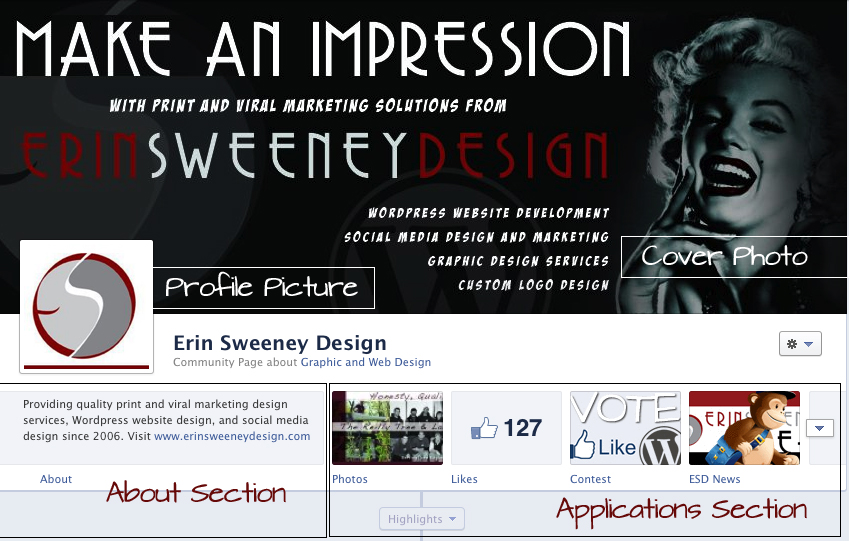
Facebook is making their new timeline mandatory on March 30th…just 21 days from now. What’s important as a business owner is knowing what these changes entail, and developing a game plan to make the most of the roll-over. For starters, let’s break down the top of the page since this is where your audience will land and it’s our best chance for making a positive first impression.

The top of the page is broken down into 4 very important elements. Before you publish your page in the new timeline, be certain that all 4 elements have been considered and are ready to go.

Cover Photo

The cover photo is the first impression you will make on the viewer. It needs to be visually striking and reflect your brand. One very important thing to consider is Facebook does not allow for any sort of call to action to be included in this cover image (i.e., “Click to like my page”) so be certain when you design the cover photo that it refrains from including a call to action. This also would include adding phone numbers and/or web addresses as part of the design. Any element that would require the user to perform another task is not allowed. Instead focus on a design that will grab the viewers attention and influence them to become a fan. The dimensions for the cover photo are 851 pixels x 315 pixels.

Profile Picture

This is basically a thumbnail. It is what will be seen on the newsfeed when you post from your business page. Be sure it includes your logo. It’s preferable that the logo is not cropped but displayed in full. The dimensions for the profile picture are 180 pixels x 180 pixels.

About Section

With the new timeline, this section is now prominent so take advantage of that. Previously this section was hidden in the sidebar. It is now a main focus on your page so be sure to use this opportunity to sell your brand! Include contact information here that could not be included on the cover photo such as a web address.

Applications Section

Another great improvement with the new timeline is the Apps section. Again, a section that was previously hidden is now front and center so utilize this to best sell your page and gain fans. The Photos app is standard and will always come first. At least for now that is one app we can not change. But we can move all of the other apps around where we want them so be sure the ones that are showing in the top row are the ones you want the viewer to notice. There is a drop down arrow to view additional apps that are not in the top 4, but the majority of your viewers will not click on this, so focus your efforts on the top line. Be sure to utilize relevant images for each app so they stand out.

Highlights

Some things to thank Facebook for as we transition our business page over to the new timeline:

  1. The new cover photo offers an excellent opportunity for us to really brand our page and make a strong first impression.
  2. The new About section is another opportunity for us to sell our brand and gain fans.
  3. The new timeline offers website-like navigation with the addition of the highlighted Apps section. Fans can jump from app to app.
  4. The width of the page has almost doubled, going from 520 pixels to 810, again allowing us an opportunity to make a strong first impression.

And That’s Just The Beginning!

The top of the page will get the viewers attention. But there’s more to your business page than what’s up top. We need to move down a bit to see the other changes coming our way.

Friends

The new timeline makes the Friends section more prominent. This section will display friends of the viewer that already like the page. Most people are more likely to follow the crowd. If their friends like the page, chances are they will to!

Pinned Posts

The new timeline allows us to pin a post. This means a post can be featured at the top of the page for a week at a time. When someone visits the page, the pinned post will be displayed at the top, keeping it fresh without having to create multiple postings. This is useful when running a contest on your page. To pin a post, click on the Edit or Remove link in the upper right hand corner and click “Pin to Top.”

Highlighted Posts

When you highlight a post, it creates a double-width of that post. This is a great way to jazz up your wall with cool photos and video. To highlight a post, click the star in the upper right hand corner. Again, this works well with visually appealing imagery to really decorate your wall.

More Highlights!

A few more things to thank Facebook for…

  1. The wall of your business page will now be more visually appealing with the addition of highlighted posts.
  2. Friends are now front and center which should boost viral growth.
  3. We are also able to manage the settings of the comments that fans are making that would show in the Friends section. We can uncheck show recent posts by others or choose to allow the admin to review comments before they post on your wall. This helps us control any negative comments that could hurt our brand image.

Some Things Never Change

With all this new progress, one thing remains the same: the newsfeed is still king. Most of your fans (9 out of 10 people only visit your page once) will see your brand through the newsfeed. What you post is what they see. Your Facebook marketing strategy needs to continue to focus on how you moderate, comment and interact with fans.

Take time to develop your game plan. Once you publish your page in the new timeline, there’s no going back. Enjoy the new changes and make the most of them. Good luck!


You made the move to online marketing and activated a business page on Facebook. Now what? Outside of optimizing the page with information and making it visually interesting, what else is important? Utilizing your wall through smart posting. How do you post to encourage page fans to engage with your page, and therefore spread the word? Below are 5 Top Facebook Tips that you should be practicing.

Facebook Tip #1: Don’t Sell

Do not preach or sell to your fans. I know it may be instinctual for many to want to sell their business services. As a small business owner, we’re our own megaphone. If we’re not talking about ourselves, who is? But it can turn others off. Instead engage your fans by offering special deals in a post (promotes the business and gives fans a deal!), discuss a current event, offer an inspirational quote, etc. Also, a good way to sell yourself through a post without being too pushy is to tie it to something on your site. Your fan is both engaged AND on your website. It’s a win-win.

Facebook Tip #2: Post Often

Many Facebook business page owners wonder how often they should post. Most experts agree 3-5 times per day is optimal. That may seem excessive, but if you develop a content calendar (a schedule that serves as a roadmap of posting options such as photos, questions, blogs, promos, etc.), it can be done. Set aside 5 minutes a few times daily (set a timer on your phone to remind you) to log on and post. The more your message appears on other Facebook walls, the better!

Facebook Tip #3: Have a Call To Action

In other words, don’t make a statement. Ask a question. Tell people to click the Like button. Ask for comments on your post. Tell them to watch a video you’ve posted or direct them to your website and request feedback.

Facebook Tip #4: Highlight Your Business

What you do is great. You’re talented. You have a lot to offer. You enjoy your business and want to keep doing it so you need to promote your services to gain more customers. So, yes, it’s ok to highlight yourself now and then. A good rule of thumb: If you are posting 5 times per week, make 4 of the posts helpful or fun information for your fans and allow 1 to be a self-promotion post. Remember, self-promotion is good when in limited amounts.

Facebook Tip #5: Make It Fun!

With 850 million people on Facebook (and climbing), there is a heck of a lot of posting going on. Most Facebook users are only on sporadically each day. Make their time online enjoyable. If most of your fans are clients, offer free tips and advice that they can use. Post entertaining information, pictures, video, links. Make your fans look forward to a new post from your business!

Remember, Facebook is all about conversation. For business owners, it’s an extension of your brand and another opportunity to market your business to an audience. Put your personality into your wall posts and consider these tips when posting on your page. You’ll find you’ll gain a lot more Friends along the way. Good luck!

I know blogging shouldn’t be about boasting. But just this once….

2011 was such an incredible year of growth for Erin Sweeney Design, and the beginning of 2012 has already seen 3 brand new ESD clients! I spent the past year meeting so many new clients and developing professional contacts. I now have over 20 clients. My business is growing faster than I’d ever imagined and I am so grateful for this opportunity to be able to continue designing while also staying home with my children. I have clients based in Maryland, Rhode Island and Massachusetts, and I expect my reach to extend to other states this year. I don’t see the momentum slowing down anytime soon. The need for social media marketing strategies and a strong web presence is more important now than ever before for small business owners and that is where Erin Sweeney Design excels. I specialize in not only designing WordPress websites for my clients, but optimizing those sites for search-engines, as well as designing marketing collateral. In short, I’m a one stop shop. The more websites I complete, the more my skills improve and the better designer I become.

I believe 2012 will be my best year yet. So to celebrate I’ve developed a new look for my business, as well as added additional services for my clients. I’m working more and more on developing social media marketing strategies for clients, as well as providing general help and information when it comes to the best ways to utilize those strategies. I’m concentrating on developing strong Facebook business pages for clients since every 1 in 8 minutes on the Internet is spent on Facebook. And the service is free. How much more motivation does a small business owner need to jump on the bandwagon? But, obviously, not all pages are created equal, so to really stand out, it must be well designed. There are many social media accounts out there, so I help clients decide which will work best for their business. And as they always change, so does the service I provide to my clients. I am able to keep up with the ever changing environment and bring that knowledge back to my clients to help them build strong campaigns.

I’m excited for the year ahead and hope to continue adding services that not only develop my professional abilities but enhance the experience for my clients and potential clients as well.

Facebook has an incredible reach for small business when it comes to viral marketing. With approximately 1 in every 7 people in the world on Facebook, your marketing strategy needs to include fully utilizing the offerings of Facebook to market your business. One of these offerings is the ability to host an Event.

To create an Event on Facebook, you must be logged in to your personal profile (Pages can’t invite people to an Event.) Click on ‘Events’ on the left side bar. A page will open up listing any upcoming Events associated with your account. To create your own, click +Create an Event. Very important. When creating an Event, many hosts skip the part about being able to upload  a photo to replace the default calendar graphic that Facebook gives us. Using a photo related to the Event will help promote it. Something that just takes a second can make a big difference.

OK. Now that you have the Event started and a cool photo up, next be sure to accurately describe the Event. You can make it a public event by checking “Anyone can view and RSVP” or keep it only to those you choose by unchecking this box. You can also choose to show the guest list or hide it. Depending on the Event, your needs may vary. Once all the Event details have been included, it’s time to promote the Event.

  • Shoot out an email blast. This will also link people to your Facebook Page and possibly help you gain Likes.
  • Log in to Twitter and tweet about it. Encourage followers to retweet and even invite friends.
  • Link the Event to your website.
  • Cross-promotion is an incredibly useful tool in social media. Link the Event to other accounts you have.

Now the Event is out there. You’re getting some responses. What do you do next? Be sure to interact with the attendees. Answer any questions they may have about the upcoming Event. Continue to promote it by referring to it in a status update and sending out tweets. Ask others to help you promote the Event through their own status updates and on their Twitter page. There’s no better way to drive up attendance than through constant promotion. Get the word out.

Once the Event has passed and proved to be a huge success, it’s no time to rest. Follow up. Post photos and video from the Event on your Page. Ask attendees to tag themselves in the photos and make comments about the Event. This spreads word of the Event by posting the photo or comment on their Walls. And be sure to thank attendees. Though we’re all online, the old school rules of politeness still exist. As long as everyone had a positive experience, they’ll keep coming back.

Attempt to include Events, whether live or virtual, in your marketing plan at least 4 times per year. You’ll see your exposure grow, both online and out in the real world where it counts.