Follow the history of Santa Claus from a serious but generous 4th century saint to the jolly St. Nick still delighting children today.

Follow the history of Santa Claus from a serious but generous 4th century saint to the jolly St. Nick still delighting children today.

Over centuries, some of the greatest artists in history have sought to depict the story of Christmas. This article takes a look at 10 of the most glorious works of art ever created that show us the true meaning of Christmas.

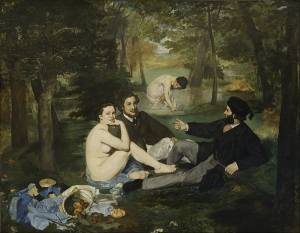 Impressionism (1865–1885) and Post-Impressionism (1885–1910)
Impressionism and Post-Impressionism have been called a fight about form and function in art. Impressionism was a painting style concentrating more on color and the representation of things in the real sense. Post-Impressionist painters gave a lot of importance to the emotional aspect of human behavior, and little importance to the appearance of the subject. The Impressionists began by using Edouard Manet’s technique of painting with bright colors, without regard for shadows, and by painting outdoors rather than in a studio. Painters used thin visable brushstrokes, concentrated on portraying light, and displayed ordinary subject matter. Paul Gauguin, one of the fathers of Post-Impressionism, believed that the ability to choose colors, rather than copy nature, was part of the artist’s power. Post-impressionist painters used vivid colors, a bold application of paint, and portrayed real-life subject matter using geometric forms and unnatural colors. Impressionism paved the way for other styles including Cubism and Fauvism, while Post-Impressionism paved the way for Modern Art. To view art from this period, visit http://on.fb.me/1ttgFch
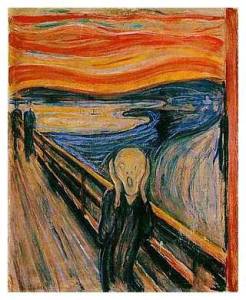 Expressionism (1905-1933)
Expressionism originated in Germany at the beginning of the 20th century. It was a period where artists sought to portray meaning or emotional experience in order to evoke a mood or an idea. It was a reflection of the artists’ perspective, substituting the visual reality of an object with their own interpretation to represent its meaning. Artists used distortion and exaggeration for emotional effect. Unlike Impressionism, its goals were not to reproduce the impression suggested by the surrounding world, but to strongly impose the artist’s reaction to the emotion stirred by the subject. Characteristics included highly subjective subject matter that was personal and spontaneous, distorted, exaggerated, and primitive, vivid, jarring, and sometimes violent. To view art from this period, visit http://on.fb.me/1sLUAIs.
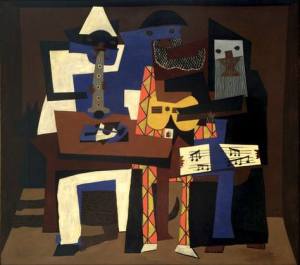
Cubism, pioneered by Georges Braque and Pablo Picasso, began around 1907, and has been considered the most influential art movement of the 20th century. It was the first abstract style of modern art. Cubist paintings look at subjects in new ways in an effort to depict three-dimensions on a flat canvas. Drawing on the expressive energy of art from other cultures, particularly African, Micronesian and Native American art, artists were intrigued and inspired by the stark power and simplicity. Similar to art from Ancient Egypt, Cubists wanted to show the most important parts of the things they painted. There were 2 stages: Analytical Cubism (artists analyzed the subject and broke it up into different blocks, looked at the blocks from different angles, then reconstructed the subject, painting the blocks from various viewpoints) and Synthetic Cubism (artists began to add in colored paper, newspapers, and other materials in a collage.) Popular subjects for Cubism included musical instruments, people, bottles, glasses, and playing cards. There were very few Cubist landscapes. To view art from this period, visit http://on.fb.me/1rx3o6a

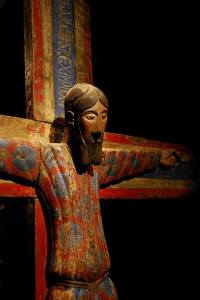
The Romanesque Period began around approximately 1000 AD. This style was seen throughout Europe until the rise of the Gothic style in the 13th century. Romanesque architecture retained many basic features of Roman architectural style, while both sculpture and painting were characterized by a very vigorous style. Painting was similar to the Byzantine style of portraying iconographic themes. Works were lavishly decorated, and in architecture we saw the capitals of columns often carved with complete scenes of several figures. High relief was above all the sculptural mode of the period. Colors were striking and mostly primary. This was the period where stained glass became widely used, and in painting, art tended to be within a frame, creating a sort of tension within the composition. Figures continued to be portrayed in size proportional to their importance, and portraiture was rarely seen. The focus was on elaborately decorated themes of religious significance. To view art from this period, visit http://on.fb.me/1mCkkA
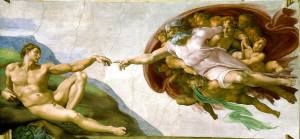
Renaissance Art emerged as a distinct style in Italy and saw a rebirth of classical culture. The goal of most Renaissance Art was to show the importance of people and nature, not just religion (a major shift from earlier periods). It tried to show people as lifelike (3-dimensional) and engaged in everyday activities, capturing the world as it is. Other characteristics of Renaissance art are that it reflected a great interest in nature, people were depicted showing an increasing knowledge of anatomy, bodies looked active and were shown moving, faces were expressive, and the use of symmetry, perspective, and light treatments became more realistic. To view art from this period, visit http://on.fb.me/1sULSH0
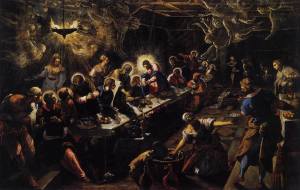
Mannerism emerged from the later years of the Italian High Renaissance, and acted as a bridge between the idealized style of Renaissance art and the dramatic theatricality of the Baroque. Mannerist compositions, in contrast to High Renaissance, were typically associated with attributes such as emotionalism, elongated human figures, strained poses, unusual effects of scale, lighting or perspective, vivid often garish colors. Interestingly, Michelangelo, the king of High Renaissance art, is said to have segued nicely into Mannerism, having been known to have a tendency toward the dramatic and emotive in his art. As a whole, Mannerist painting tends to be more artificial and less naturalistic than Renaissance painting. To view art from this period, visit http://on.fb.me/1rbqpLx
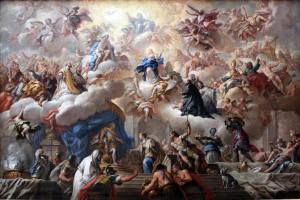
The Baroque Period in art history saw some of the greats, including Reubens, Rembrandt, and Caravaggio. It was a style that used exaggerated motion and clear detail, showing us drama, tension, exuberance, and grandeur to draw the viewer in to participate in the scene. The Catholic Church encouraged this art form as a result of the Protestant Reformation, demanding that art speak to the illiterate rather than to the well-informed. As part of a Counter Reformation, the Church wanted to re-infuse the Catholic faith with new vigor and confidence. The style exaggerated lighting and portrayed emotionally tense scenes. Images are direct and obvious, with a dramatic use of color. There are severe contrasts between light and dark, as well as light and shadow. In contrast to Renaissance art with its clearly defined planes (e.g., each figure placed in isolation from each other), Baroque art has continuous overlapping of figures and elements. Baroque works did not show everyday life. Instead, they reaffirmed the Catholic faith and glorified both church and monarchy of their influence and power with themes of grandiose visions, ecstasies and conversions, martyrdom and death, intense light, and intense psychological moments. To view art from this period, visit http://on.fb.me/1m15PWN
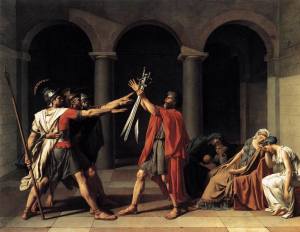
The Neoclassical Period saw a desire to rekindle the spirit and forms of classical art from ancient Greece and Rome, as well as their principles of order and reason. Neoclassicism was also, in part, a reaction against the sometimes vulgar display of Baroque art, as well as the decadent frivololity of the decorative Rococo school. Neoclassical paintings and sculptures were serious, unemotional, and sternly heroic. Neoclassical painters depicted subjects from Classical literature and history, using sombre colours with occasional brilliant highlights, to convey moral narratives of self-denial and self-sacrifice, while Neoclassical sculpture was restrained compared to the more theatrical sculpture of the Baroque style. To view art from this period, visit http://on.fb.me/1ri7H4X
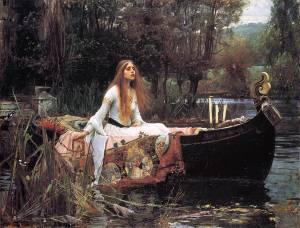
Romanticism was a reaction against Neoclassicism and is also considered a reaction to the Industrial Revolution which occurred during the same time period. It was a movement that glorified concepts such as liberty, survival, ideals, hope, awe, heroism, and despair. Romantic art focused on emotions, feelings, and moods of all kinds. It was one of the first times in the history of art that landscapes became a significant subject for painting. In addition to landscapes, religion and revolution also made up the widely varying subject matter of most paintings, while brushwork became looser and less precise. The great Romantic artist Caspar David Friedrich summed up Romanticism saying “the artist’s feeling is his law”. To view art from this period, visit http://on.fb.me/1td6H0F
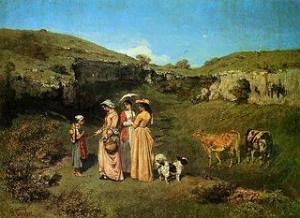
Realism was an attempt to represent subject matter truthfully, with an emphasis on the ugly or sordid. It rejected Romanticism, revolting against the emotional and exaggerated themes of the movement. Realism artists painted everyday subjects and people. They didn’t try to interpret the setting or add emotional meaning to the scenes. It is believed the invention of photography in 1840 likely helped to spur on the Realism movement. Unlike some other artistic movements, there was little sculpture or architecture as part of this movement. To view art from this period, visit http://on.fb.me/1oZ0KOJ

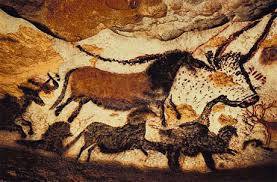
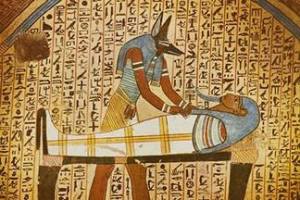
The art from Ancient Egypt shows a heavy focus on the afterlife, with surprisingly little artistic change over the course of 3000 years. Much of the artwork had to do with their religion, and most were never intended to be seen. They were designed to benefit a divine or deceased recipient. The art in tombs was meant to assist the deceased in the afterlife. Another characteristic attributed to the art of Ancient Egypt is the method in which 2-dimensional objects were represented. Each object was rendered from its most recognizable angle. This is why images of people show their face, waist, and limbs in profile, but eye and shoulders frontally. Also, different classes were depicted by scale. Kings were the same size as deities, both being larger than the elite and far larger than the common Egyptian. Luckily, because of the incredibly dry climate, much of the art from Ancient Egypt has survived, though a majority of art was stolen from tombs by thieves over thousands of years. To see art from this period, visit on.fb.me/UYAQTD
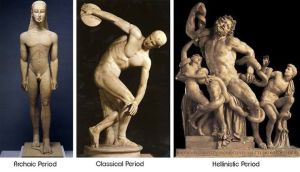
The art of Ancient Greece is usually divided stylistically into four periods: the Geometric (beginning c. 1000 bc), Archaic (7th century bc), Classical (beginning c. 480 bc), and Hellenistic (beginning c. 336 bc).The Ancient Greeks were perfectionists in art. This especially holds true in their sculpture. Little is known about the Geometric, or Greek Dark Ages, period. But during the Archaic Period, we saw sculptors portraying both men and women with similar features, standing stiffly with arms at their sides. Later, during the Classical Period, they sculpted subjects in more relaxed postures and in action scenes. After Alexander the Great conquered much of Asia, Ancient Greek sculptors became influenced by the cultures and people they had conquered. This period is known as the Hellenistic Period, the time when new subjects including women, children, and common people appear in Greek art, and sculptors allowed for their statues to be admired from all angles.
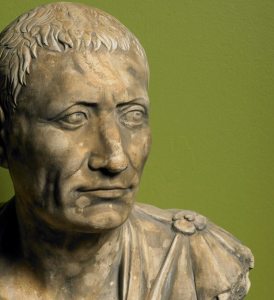
Around 200 b.c., the Ancient Romans began pillaging countries and looting the towns. After conquering Greece, they brought many Greek artists to Rome to make sculptures for them in the Greek fashion. The art of Ancient Greece had a great influence on the art of Ancient Rome. Only after Rome became a dictatorship around 27 b.c. did Roman art develop its own style. Sculpture was considered the highest form of art by Ancient Romans. Original Roman sculptures attempted to portray a real person, typically paying more attention to each person’s distinct face rather than trying to depict the ideal person like the Greek artists did. Most of the early sculptures were of a person or a mythological character, and were primarily used is decorations in public buildings, public parks, and private homes and gardens. One of the most popular types of sculpture in Ancient Rome was the bust. Wealthy Romans placed busts of their ancestors in the atrium of their homes as a way for them to show off their lineage. To see art from this period, visit on.fb.me/1oju6Mo